Winter in North Dakota is hard on floors. By the time spring arrives, months of tracked-in road salt, sand, ice melt, and moisture have left their mark on hard floors, carpet, matting, and entryways throughout your facility. What your building looks like in April often comes down to the floor care program you ran from November through March and the steps you take now to get ahead of the transition.
Spring is the right time to assess, deep-clean, and reset your floor-care routine before the summer season begins. This post walks through what a thorough spring floor-care transition looks like for commercial facilities and how to ensure your operation comes out of winter in good shape.
Why Spring Floor Care Matters More Than You Think
Salt and ice melt are effective at keeping walkways safe, but they are genuinely damaging to floors. Salt crystals grind into resilient flooring under foot traffic, dulling finishes and scratching surfaces over time. Moisture tracked in during freeze-thaw cycles seeps into grout lines, floor finish layers, and carpet backing. Left unaddressed, winter residue accumulates in layers that routine daily cleaning cannot remove.
The consequences are not just cosmetic. Salt residue on hard floors becomes slippery when wet, creating a slip-and-fall hazard that persists well into spring if floors are not properly cleaned and refinished. Carpet and matting that holds embedded winter soils hold odors, reduce indoor air quality, and wear down faster.
Addressing all of this in April, rather than waiting until the building “looks dirty,” is the approach that protects your floors, your people, and your facility budget over the long term.
Step 1: Swap Out Your Winter Entry Matting
Entry matting does the heaviest lifting during winter, trapping salt, sand, and moisture before they reach your interior floors. By April, that matting has absorbed everything the season threw at it. Before you assess anything else, start at the door.
Inspect matting for wear, compression, and soil load. Matting that is saturated, compressed, or visibly worn is no longer doing its job. A matting system that fails to trap soils at the entry point creates downstream cleaning problems throughout the facility.
Clean or replace as needed. Rubber-backed mats can be cleaned and dried thoroughly before returning to service. Matting that has reached the end of its useful life should be replaced — not dragged into another season.
Transition to lighter spring matting. Heavy winter scraper mats serve a specific purpose. As spring progresses and tracked-in soils shift from salt and ice to mud and water, adjusting your matting selection to match seasonal conditions helps keep your entryways performing well. D&E Supply carries a range of matting solutions — including products from M+A Matting — to support this seasonal transition.
Step 2: Deep Clean Your Hard Floors
Hard surface floors — vinyl composition tile (VCT), luxury vinyl tile (LVT), concrete, and other resilient flooring — need more than a routine mop after winter. The goal at spring transition is to strip away what daily cleaning has left behind.
Remove Salt and Ice Melt Residue
Salt residue appears as white, hazy deposits on the floor and in grout lines. A standard neutral cleaner will not remove it effectively. Use a dedicated floor cleaner formulated to neutralize alkaline salt residue, apply it with a clean mop head, and allow it to dwell before scrubbing.
Strip and Refinish Where Needed
If your hard floors carry a finish layer, winter is often when that finish takes the most damage. After a thorough cleaning, assess the condition of the finish:
- Scuff marks and surface scratches that affect only the top layers of finish can often be addressed with a buffing or burnishing pass followed by a maintenance coat of finish.
- Deep scratches, heavy yellowing, or uneven wear patterns are signs that a full strip and refinish is the right call. Stripping removes all existing finish down to the floor surface, allowing you to start fresh with a clean, even application.
D&E Supply carries Betco floor care chemistry — including strippers, finishes, and restorers — designed for commercial resilient flooring. Our team can help you identify the right product combination for your floor type and finish system.
Run Your Floor Scrubber
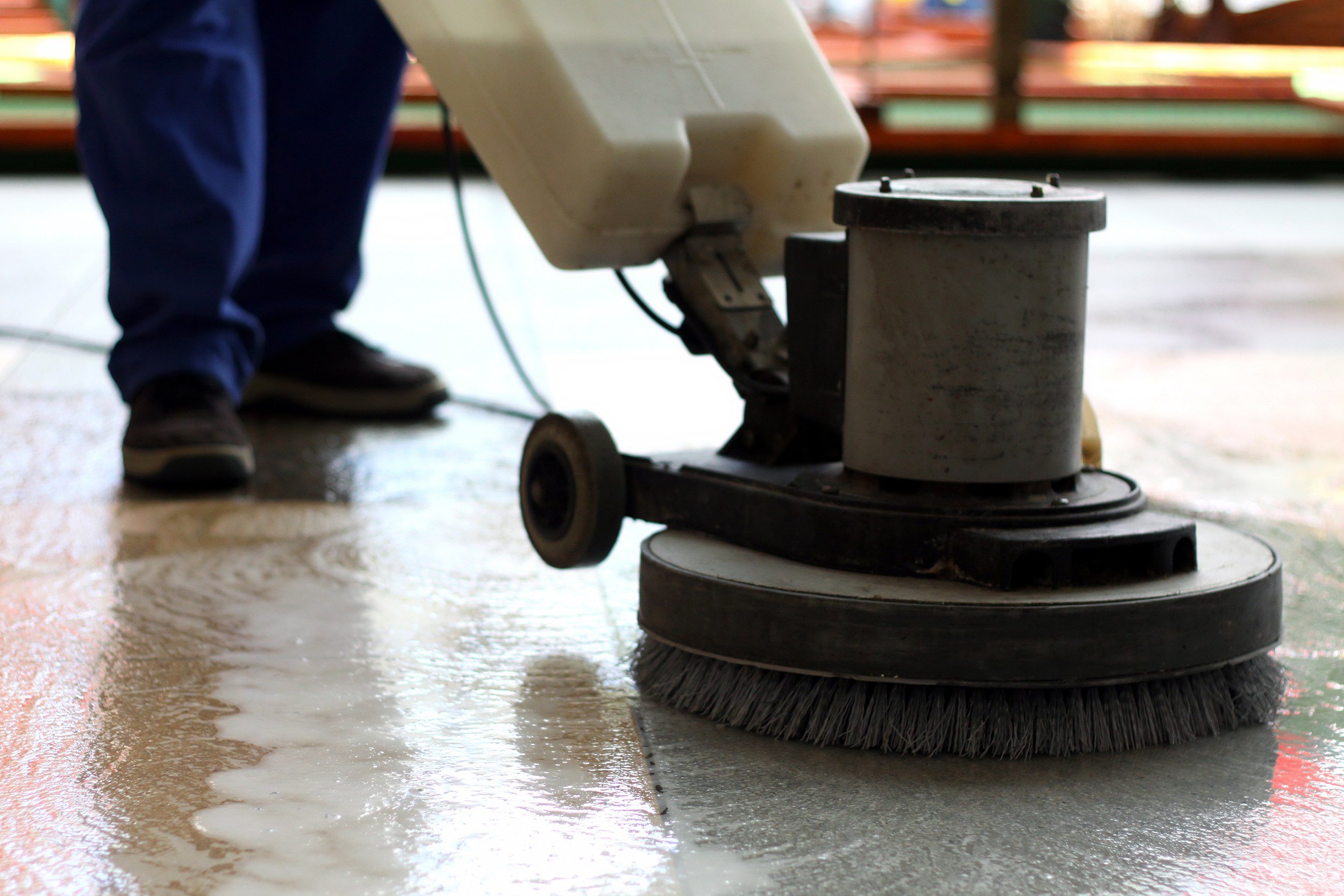
If your facility uses an automatic floor scrubber, spring is the time to put it to work. A scrubber covers ground more thoroughly and efficiently than a mop — reaching corners of the floor where winter soils tend to accumulate and ensuring consistent chemical contact across the entire surface.
This is also a good time to service your scrubber. Check the squeegee, inspect the brushes or pads, clean the solution and recovery tanks, and confirm that the machine is operating at spec before heavy spring use. D&E Supply carries floor care equipment and can connect you with service support if your machine needs attention.
Step 3: Extract Your Carpets
Carpet in commercial facilities’ hallways, offices, lobbies, and common areas accumulates significant soil during the winter months. Salt, sand, and tracked-in moisture work their way into the carpet pile and backing, where they cannot be removed by vacuuming alone.
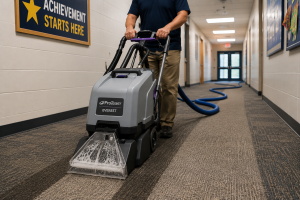
Spring deep extraction removes what routine cleaning left behind. A commercial walk-behind carpet extractor, like those D&E Supply carries, injects a cleaning solution under pressure into the carpet fibers and recovers it, along with loosened soils, into a recovery tank. Done correctly, extraction restores carpet appearance, reduces odors, and extends carpet life by preventing abrasive soil particles from grinding down fibers over time.
Pre-treat high-traffic lanes and entryway carpet before running the extractor. A targeted pre-spray allows the cleaning chemistry to break down heavy soil deposits before the machine passes through, significantly improving results.
Plan for dry time. Schedule carpet extraction when the space can be kept clear for adequate drying. Good airflow and moderate room temperature speed the process. In spring, when windows can be opened and HVAC systems are running in transition mode, conditions are generally favorable for drying.
Step 4: Reassess Your Daily Floor Care Routine
Spring is a natural time to evaluate whether your daily floor care process is still working. Consider the following questions:
- Are you using the right cleaning chemistry for each floor type in your facility?
- Is your mop or microfiber system being laundered and replaced on an appropriate schedule?
- Are your floor scrubber pads or brushes matched to the floor surface and the soil load?
- Do your team members know the proper dilution rates for the chemicals they are using?
Small adjustments to daily processes often produce meaningful improvements in how floors look and how long they stay clean. D&E Supply’s knowledgeable team can walk you through product selection, dilution guidance, and cleaning frequency recommendations tailored to your facility type.
Common Mistakes to Avoid During Spring Floor Transition
Skipping the deep clean and going straight to refinishing. Applying a new floor finish over a surface that still carries salt residue and embedded soil traps the problem beneath the finish layer. The result is a floor that appears to be better in the short term but wears out quickly and requires more frequent attention.
Using high-alkaline cleaners on finished floors every day. High-pH cleaners are effective for stripping, but regular use on finished floors erodes the finish faster than it should. Match your daily cleaner pH to the floor system you are maintaining.
Waiting until the floors look visibly damaged before acting. Most floor damage builds gradually and is easier and less costly to address before it becomes obvious. Seasonal transitions are the right checkpoints for assessment and intervention.
Neglecting entry matting. Entry zones are the highest-impact area in any floor care program. Insufficient matting at the entry point allows more soil to reach the interior floors, resulting in more labor and product costs downstream.
Frequently Asked Questions
How often should commercial hard floors be stripped and refinished? Frequency depends on foot traffic, floor type, and the maintenance program in place. High-traffic commercial floors on a regular buffing and scrubbing program may need a full strip and refinish once or twice per year. Lower-traffic areas may go longer between full refinishes. Spring and fall transitions are natural checkpoints for assessing floor condition and making that determination.
What is the best way to remove salt stains from hard floors? Salt stains are alkaline residue. Clean them with a slightly acidic or neutral-pH floor cleaner, not a standard alkaline one, allowing adequate dwell time and light scrubbing. Stubborn salt deposits may require a dedicated salt and mineral remover. D&E Supply carries products formulated for this application.
How do I know if my floor finish needs to be stripped or just buffed? If the floor surface shows uneven wear, yellowing, black marks that do not buff out, or a buildup of finish at the edges of the room, a full strip is likely the right call. If the finish is in reasonably good condition but has lost its gloss and taken on light surface scuffs, buffing with a maintenance coat of finish may be sufficient.
When is the right time to switch from winter to spring matting? Generally, once daytime temperatures are consistently above freezing and tracked-in soils shift from salt and ice to mud and water, transitioning matting makes sense. In North Dakota, that window typically opens in April, though weather can vary. The condition of the matting itself, not just the calendar, should drive the decision.
Can D&E Supply help with a comprehensive spring floor-care product package? Yes. D&E Supply’s team can recommend cleaning chemistry, floor finish, matting, and equipment based on your facility type and floor surfaces. Contact our team or browse catalog.desupply.com to get started.
Set Your Facility Up for the Season Ahead
Spring floor care is one of the highest-return investments a facility can make. Done right, it removes the accumulated damage from winter, resets your floor’s appearance, and positions your team to maintain results for the rest of the year with less effort.
D&E Supply has been helping North Dakota facilities get this right since 1966. Whether you need floor care chemistry, equipment, matting, or guidance on building a more effective program, our knowledgeable team is ready to help.
Visit desupply.com, browse our product catalog at catalog.desupply.com, or call us at 701-255-4755. Let your problems become ours.