Odor Control in Commercial Facilities: What Works — and What Just Masks the Problem
Odor in a commercial facility is rarely just a smell. It is a signal that a surface was not cleaned thoroughly enough, that a liner was left in too long, that a drain needs attention, or that a restroom care product is not performing as it should. When the weather heats up, those signals get louder. Summer temperatures accelerate bacterial growth, making odor problems harder to ignore and easier for visitors and customers to notice.
Odor control in commercial facilities tends to be addressed reactively — when someone complains, or the smell is already noticeable. A better approach is to build odor management into your regular facility maintenance program so problems are addressed before they become noticeable. Here is a practical breakdown of what works, where to focus, and what common mistakes to avoid.
Why Summer Makes Odor Control More Challenging
Heat accelerates the biological processes that cause most facility odors. Bacteria multiply faster, organic matter breaks down more quickly, and HVAC systems that kept spaces ventilated in the cooler months may struggle to keep up with increased occupancy and humidity.
The most common odor sources in commercial facilities become more pronounced during the summer months:
- Restrooms — Urine salts, organic buildup in floor drains, and improperly maintained dispensing systems are consistent drivers of restroom odor. In summer, higher traffic and warmer temperatures compound the problem faster.
- Waste and recycling areas — Can liners that sit too long or are not matched to the volume and type of waste they hold quickly become odor sources in the heat.
- Break rooms and food prep areas — Grease buildup, trash receptacles, and floor drains are all contributors. Summer gatherings and events increase the volume of organic waste.
- Entryways and lobbies — Wet footwear, high foot traffic, and matting that is not cleaned frequently enough can develop a musty smell during humid summer conditions.
Identifying the source before reaching for an air freshener is the most important step. Masking an odor is not the same as resolving it.
The Difference Between Masking Odors and Eliminating Them
Many facilities rely on fragranced products — air fresheners, scented cleaners, odorized can liners — to manage odor. These products serve a purpose, but they are not a substitute for addressing the source of the odor.
Masking uses fragrance to cover an unpleasant smell. The odor is still there; it is just less detectable. In high-traffic or high-expectation environments — healthcare, hospitality, food service — masking is not sufficient, and the fragrance itself can create problems for people with sensitivities.
Eliminating uses chemical or enzymatic action to break down the compounds that cause the odor. Products designed for true odor elimination target the source — whether that is uric acid on restroom surfaces, grease buildup in a drain, or organic matter in a waste container — rather than adding fragrance on top of it.
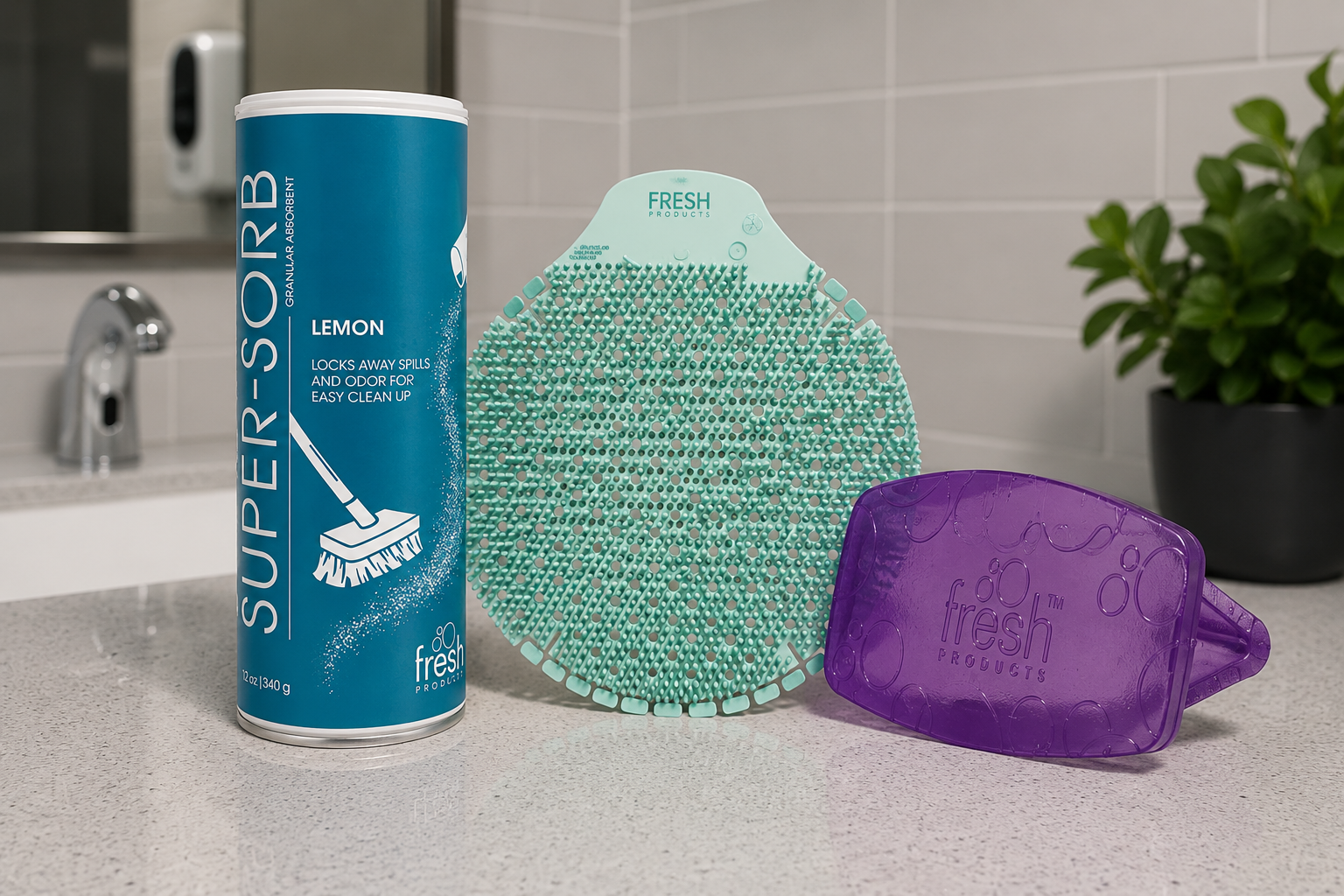
For commercial facilities, the goal should be elimination first, with any fragrance component as a secondary consideration. D&E Supply carries products from Fresh Products — a vendor focused on restroom odor control and air care — engineered to address odors at the source.
Where to Focus: Restroom Odor Control
Restrooms are the most common source of odor problems in commercial facilities and are often the least well-managed. A restroom that smells clean at 8:00 AM but noticeably unpleasant by mid-morning is a sign that the cleaning routine is not keeping pace with traffic — or that the products being used are masking rather than eliminating the problem.
Three areas that drive most restroom odor:
Floor drains. Biofilm and organic buildup in floor drains are a persistent odor source that routine mopping does not address. Drains require their own maintenance step — a drain-specific cleaner or enzyme treatment applied on a regular schedule.
Grout and porous surfaces. Tile grout in restrooms absorbs urine and cleaning product residue over time. Standard mopping skims the surface. Odor control in these areas requires a product that penetrates the porous surface and addresses issues beneath the visible layer.
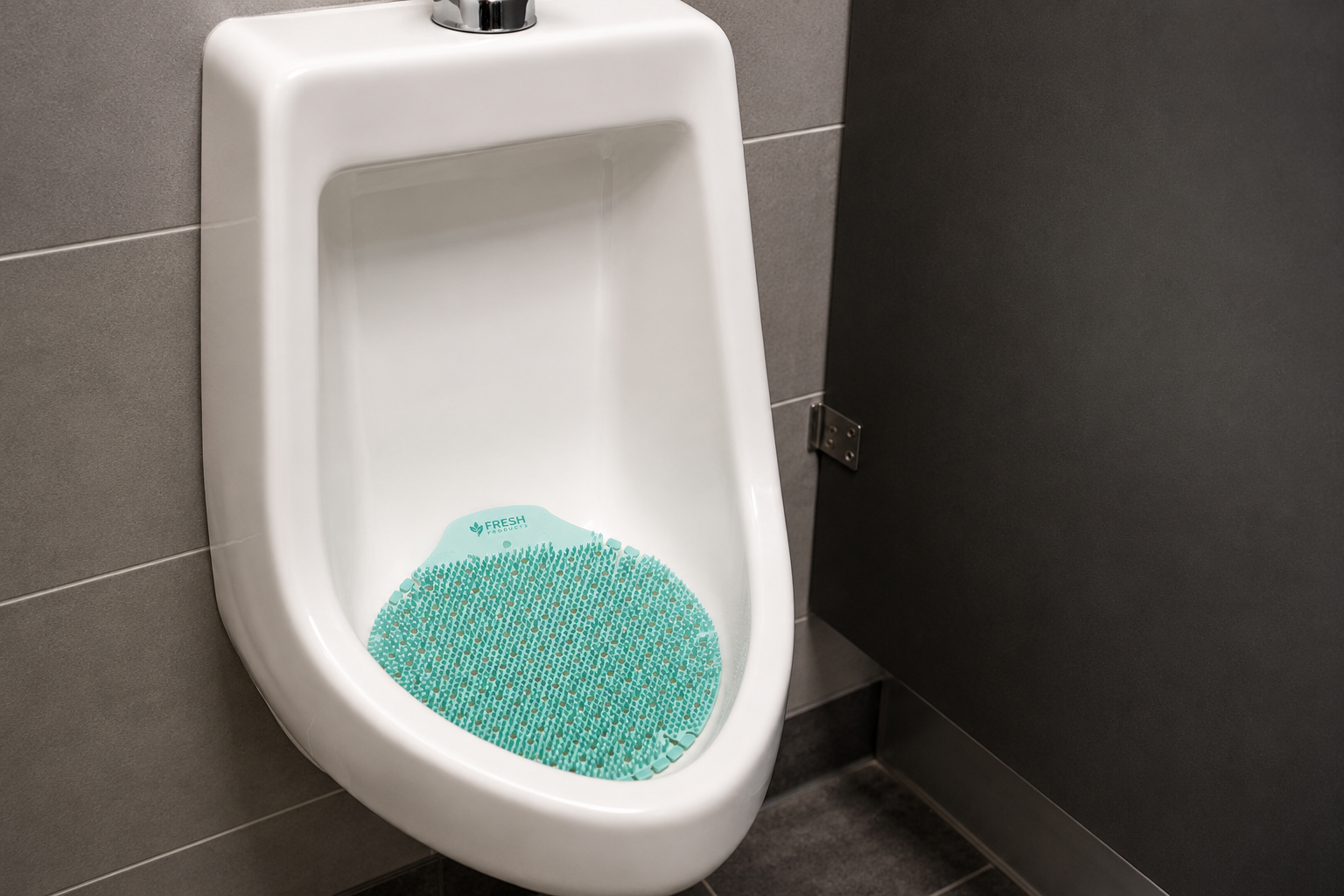
Urinal and toilet areas. Uric acid deposits on surfaces — floors, walls, and the base of fixtures — are a major odor driver. These deposits are not fully removed by general-purpose cleaners. A product specifically formulated to break down uric acid, applied as part of the regular restroom cleaning routine, makes a meaningful difference.
D&E Supply’s team can help you identify the right products for your restroom configuration and traffic volume. Our restroom care systems are designed to address these issues systematically rather than one product at a time.
Waste Area and Can Liner Management
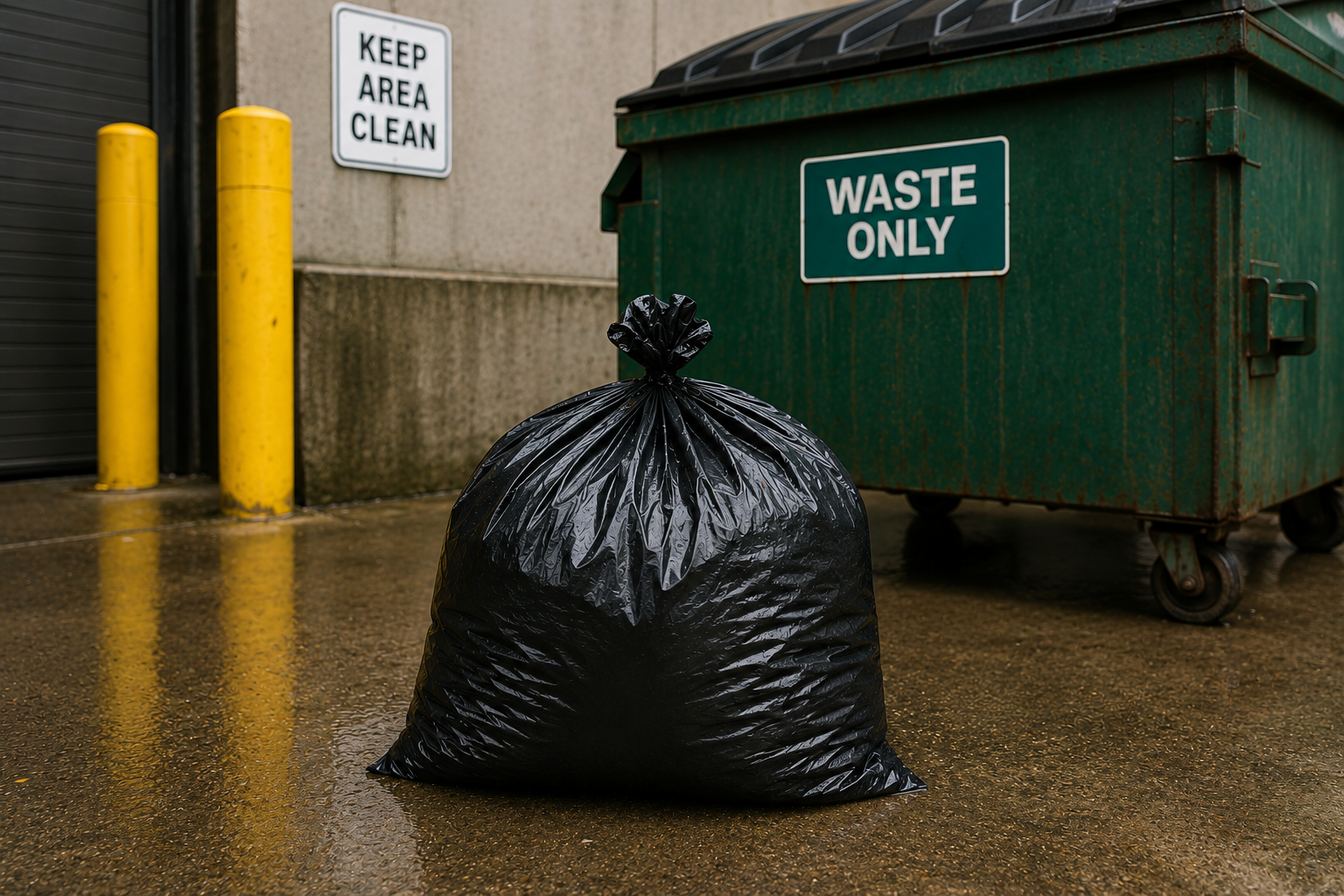
Odor from waste areas is almost always as much a management issue as a product issue. The right can liner, matched to the right container and waste type, significantly reduces odor generation. A liner that is too thin for the waste it is holding will leak. A liner that is too large will trap air and slow the bag-change process, meaning waste sits longer.
Practical steps for summer waste area odor control:
- Increase the frequency of liner changes in high-volume areas during the summer months. Organic waste breaks down faster in the heat.
- Match the liner gauge and resin type to the waste stream. Kitchen and food waste areas need heavier-duty liners than general office recycling stations.
- Use deodorized liners in areas where fragrance is appropriate and acceptable — break rooms and general waste receptacles in lobbies, for example.
- Keep dumpster and waste staging areas as clean as possible. Applying a degreaser to dumpster pads and concrete collection areas on a regular schedule reduces the organic buildup that causes the most persistent odors.
HVAC, Matting, and Air Circulation
Odor does not always come from surfaces. Ductwork, HVAC filters, and carpet or matting can all harbor odors that recirculate through the building. As part of your summer facility maintenance routine:
- Check HVAC filter replacement schedules. Overdue filters reduce air quality and can become odor sources themselves.
- Clean entry matting regularly. High-traffic mats that absorb moisture and organic material from footwear develop odors quickly in humid conditions. Matting that cannot be adequately cleaned on your current schedule may need to be replaced or supplemented.
- Consider air treatment in enclosed areas with limited ventilation — break rooms, storage closets, and elevator lobbies. Fresh Products offers a range of commercial air care systems that go beyond aerosol air fresheners.
Common Mistakes to Avoid
Applying fragrance as a first response. Fragrance on top of an unaddressed odor source is a temporary fix. The source will reassert itself, and you will end up using more product for diminishing results.
Inconsistent cleaning schedules. Odor control is cumulative. A restroom cleaned thoroughly every day maintains a baseline that is much easier to manage. Irregular cleaning allows buildup to develop, requiring significantly more time and product to address.
Using the wrong product for the surface. A general-purpose cleaner applied to a floor drain does not address drain biofilm. A surface disinfectant applied to grout does not penetrate deeply enough to address what is below the surface. Product selection should match the application.
Neglecting high-touch, low-visibility surfaces. The base of toilet fixtures, the underside of urinal screens, and the backs of partitions are areas that receive less attention during routine cleaning but contribute significantly to restroom odor over time.
Frequently Asked Questions
What causes persistent restroom odor even after regular cleaning? Most persistent restroom odors are caused by uric acid deposits in grout, floor drains, and around fixture bases — areas that are not fully addressed by standard mopping or general-purpose cleaners. A product specifically formulated to break down uric acid, combined with consistent drain maintenance, is usually the solution.
How often should floor drains be treated for odor control? In high-traffic restrooms, weekly drain treatments are a reasonable starting point. Some facilities treat drains daily during the summer months, when organic matter breaks down more quickly. Your actual frequency should be based on your traffic volume and how quickly odor re-emerges after treatment.
Are deodorized can liners worth using? In appropriate settings — general waste areas, lobbies, break rooms — yes. Deodorized liners add a secondary layer of odor management. They are not a substitute for proper liner sizing and appropriate change frequency, but they do help extend the odor-control window between changes.
What is the difference between an odor destroyer and an air freshener? An odor destroyer uses chemistry to neutralize or break down the compounds causing the odor. An air freshener adds fragrance to reduce perceived odor. Products like the Sentinel 522 Odor Destroyer Block are formulated to eliminate odors, not mask them.
Should I use the same cleaning products in restrooms year-round, or adjust for summer? For most facilities, the core product lineup stays consistent — but frequency and application intensity should increase in summer. High-traffic restrooms during peak summer months may require more frequent drain treatments, liner changes, and more thorough attention to grout and porous surfaces.
Let Odor Control Work With Your Cleaning Program, Not Against It
Odor control in commercial facilities is most effective when it is integrated into your overall facility maintenance routine — not addressed as a separate problem after something goes wrong. The right products, applied consistently, at the right intervals, make a noticeable difference for your building’s occupants and visitors.
D&E Supply has been helping North Dakota businesses manage facility maintenance since 1966. Our team can help you evaluate your current approach, identify gaps in your restroom care or waste management program, and source the right products for your specific facility and traffic level.
Visit desupply.com or browse our full product catalog at catalog.desupply.com. You can also reach us directly at 701-255-4755 or [email protected].
D&E Supply Company | 1707 E Broadway Ave, Bismarck, ND | desupply.com | 701-255-4755