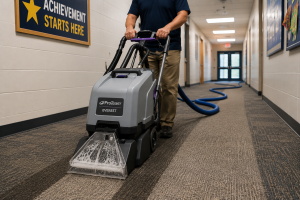
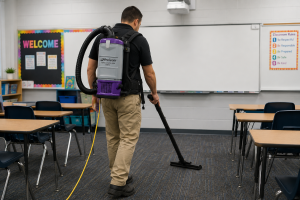
Vacuuming removes what sits on top of the carpet. Extraction removes what is embedded in it.
For commercial facilities — schools, office buildings, healthcare waiting areas, hospitality spaces — the difference between surface maintenance and deep carpet care is most evident during seasonal transitions. As summer winds down and fall foot traffic resumes, the carpet in your facility carries months’ worth of fine soil, biological material, and residue that a vacuum alone cannot remove. A walk-behind carpet extractor for commercial facilities is the tool that bridges that gap.
This post covers how carpet extraction works, when it is the right approach for your facility, and what to consider when selecting or sourcing extractor equipment.
What Carpet Extraction Actually Does — and Why It Matters
Commercial carpets are soil reservoirs. Foot traffic presses dirt, allergens, and fine particulates deep into the carpet pile, below the surface layer that vacuuming reaches. Over time, that embedded soil darkens the carpet’s appearance, breaks down carpet fibers, and becomes a source of odors and allergens that routine vacuuming will not address.
Carpet extraction — sometimes called hot water extraction or steam cleaning, though the two terms are not interchangeable — works by injecting a cleaning solution into the carpet pile under pressure, agitating the soil loose from the fibers, and then recovering the solution and suspended soil into the extractor’s waste tank. When done correctly, extraction reaches the embedded material that vacuuming leaves behind.
Why commercial facilities need extraction on a regular schedule:
- Embedded soil acts as an abrasive against carpet fibers. Every step grinds that soil against the fiber, accelerating wear. Regular extraction removes the abrasive and extends carpet life.
- Allergens, mold spores, and fine particulates settle into the carpet pile and are not captured by routine vacuuming. Extraction recovers this material and improves indoor air quality.
- Odors from organic material, food-service spills, and tracked-in biological matter accumulate in the carpet over time. Extraction combined with an appropriate pre-spray or deodorizing solution addresses these odors at the source.
- A clean carpet simply looks better. For customer-facing facilities — lobbies, waiting areas, offices — the appearance of the carpet directly affects the perception of your facility’s cleanliness and professionalism.
Walk-Behind Extractors: The Right Tool for Most Commercial Applications
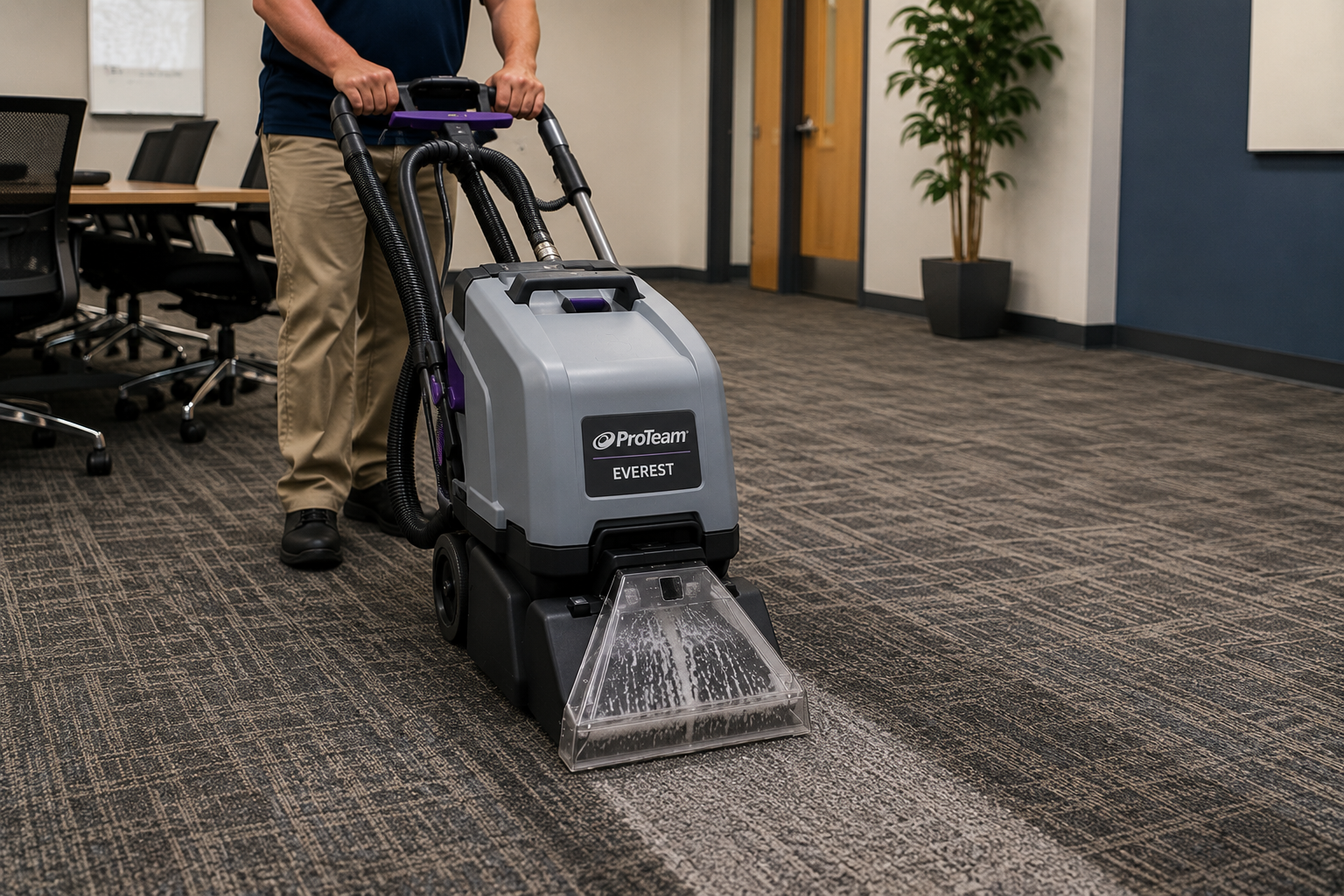
Carpet extractors come in several configurations. For most commercial facilities — individual rooms, hallways, offices, healthcare waiting areas — a walk-behind unit is the practical choice. Ride-on extractors are designed for large open areas like convention center halls or airport concourses. Walk-behind units give you the control and maneuverability you need in rooms with furniture, around workstations, and in carpeted areas where space is limited.
How a walk-behind extractor works:
The operator guides the unit over the carpet in a deliberate, overlapping pass pattern. The machine injects a cleaning solution into the carpet ahead of the extraction head, then recovers it on the return pass. Most commercial walk-behind extractors combine injection and extraction in a single head, so cleaning and recovery occur in one motion.
Key performance factors to evaluate:
- Tank capacity. Clean water and solution tank size determine how long you can clean before stopping to refill. Waste tank capacity determines how often you need to empty. In a large facility, frequent stops to service the tanks significantly affect productivity.
- Water temperature. Hot-water extraction delivers better cleaning results than cold-water extraction for most commercial soils. Extractors with onboard heaters maintain solution temperature throughout the cleaning pass. This matters in facilities with heavily soiled or high-traffic carpeted areas.
- Vacuum motor strength. Recovery performance — how much moisture the machine removes from the carpet — is driven by the vacuum motor. Better recovery means faster drying times, which reduces slip-and-fall risk and allows the space to return to use sooner.
- Machine weight and maneuverability. A unit that is difficult to turn or position around furniture reduces operator efficiency and increases fatigue during long cleaning sessions. Evaluate the turning radius and handle ergonomics before committing to a unit.
The Right Time for Extraction: Building Your Schedule
Carpet extraction should be part of a tiered maintenance program, not a one-time event. Vacuuming daily or several times per week handles surface soil. Interim cleaning — using agitation or encapsulation methods — targets the layer beneath the surface on a monthly or quarterly basis. Hot water extraction addresses embedded soil on a schedule based on your traffic and soil level.
General benchmarks for extraction frequency in commercial facilities:
- High traffic (lobbies, main corridors, food service, healthcare waiting areas): Every one to three months
- Moderate traffic (office areas, conference rooms, classroom hallways): Two to four times per year
- Lower traffic (private offices, secondary corridors, storage areas): Once or twice per year
These are starting points. Facilities in North Dakota deal with seasonal conditions that affect soil load — tracked-in road salt and sand from winter, outdoor particulates in summer — and your schedule should reflect your actual conditions.
Late summer is one of the best times for a full extraction run. Schools doing their annual carpet care before students return, offices preparing for a busier fall season, and hospitality facilities transitioning from summer to fall programming all benefit from a thorough extraction in August. Carpet dried and restored before new foot traffic resumes is the most cost-effective approach to carpet maintenance.
Pre-Spray, Agitation, and the Role of Chemistry
The extractor is only part of the equation. The cleaning chemistry you use — how it is applied, at what concentration, and with what agitation — directly affects the quality of the extraction result.
Pre-spray treatment loosens embedded soil before the extractor passes over the carpet. For heavily soiled areas, applying a commercial carpet pre-spray and allowing appropriate dwell time significantly improves soil release.
Agitation — working the pre-spray into the carpet pile with a grooming brush or a separate agitation tool — improves contact between the cleaning chemistry and the embedded soil. This step is skipped in many commercial cleaning routines, but it makes a meaningful difference in the final result.
Rinsing. Over-application of a cleaning solution, or a solution that is not fully recovered, leaves residue in the carpet that acts as a soil magnet — the carpet re-soils faster after cleaning than before. Using a separate rinse pass with clean water or a low-residue cleaning formulation reduces this problem.
D&E Supply carries commercial carpet care chemistry as part of our full-line janitorial and cleaning product offering. Our team can help you match the right pre-spray and extraction solution to your carpet type and soil conditions.
Equipment Repair and Maintenance: Keeping Your Extractor Running
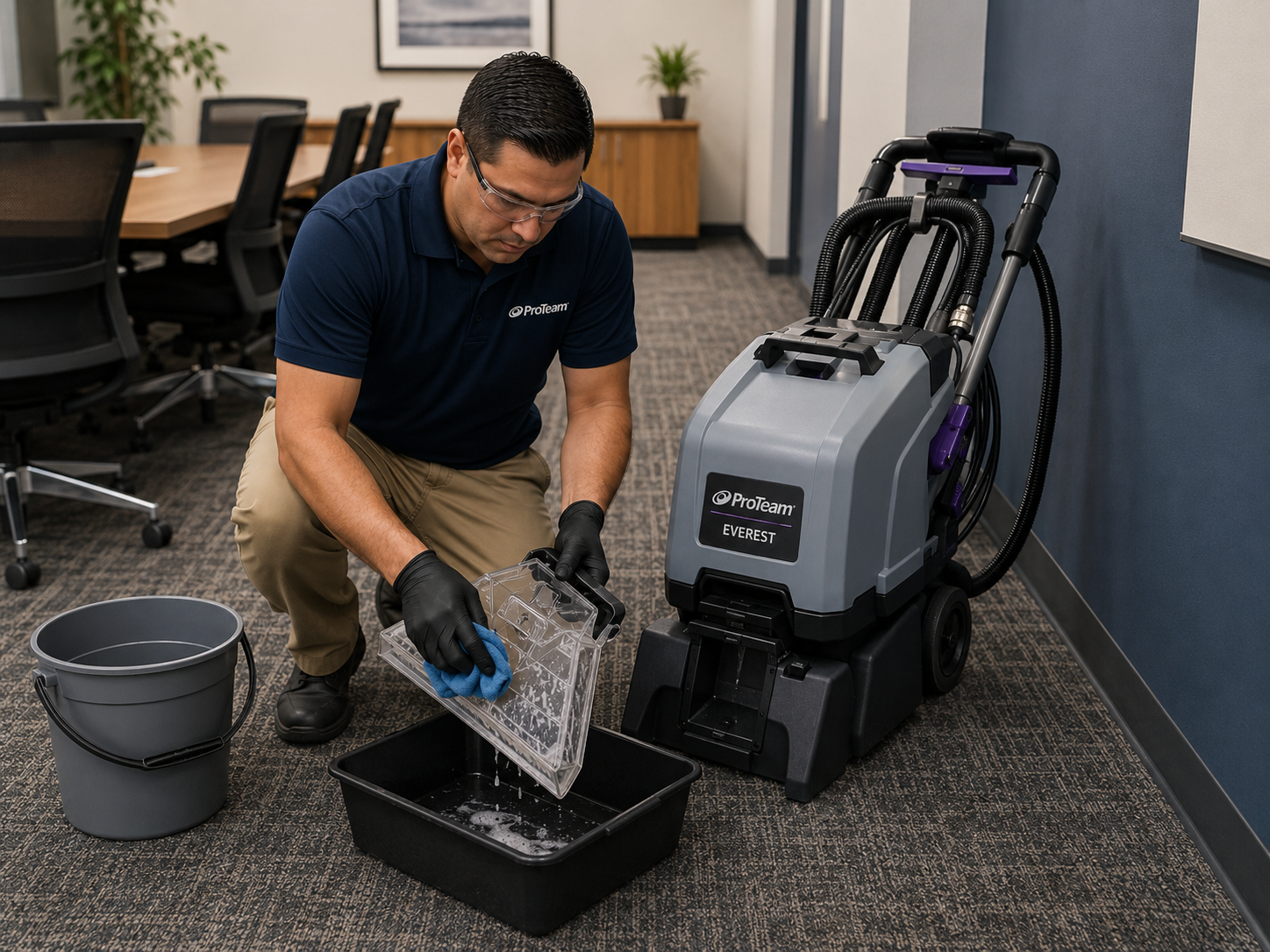
A carpet extractor that is not maintained will underperform — and may fail during a time-sensitive cleaning project. Key maintenance items to keep on schedule:
- Filter cleaning and replacement. Recovery filters collect carpet fiber and debris. Clogged filters reduce suction performance and motor longevity.
- Solution line inspection. Clogs or kinks in the solution delivery line reduce injection pressure and affect cleaning quality.
- Brush and nozzle inspection. Worn or clogged spray nozzles deliver uneven solution distribution. Check nozzle condition regularly and replace as needed.
- Waste tank cleaning. Biological material in the waste tank creates odor and can affect machine performance over time. Rinse and dry the waste tank after each use.
D&E Supply maintains a full-service equipment repair department with three full-time repair technicians. Whether you need on-site service or prefer to bring equipment in, our team handles cleaning and restoration, as well as equipment repair, for commercial facilities throughout North Dakota. Do not let a malfunctioning extractor sideline your carpet care program — reach out to our service team before the problem escalates.
Frequently Asked Questions
How long does carpet take to dry after extraction? Drying time depends on solution temperature, machine recovery performance, carpet pile depth, and air circulation. In most commercial settings with good ventilation, carpet dried in four to eight hours after extraction. High-performance extractors with strong vacuum motors reduce dry time. Running HVAC or fans accelerates drying.
Can I use a carpet extractor on all commercial carpet types? Most commercial loop-pile and cut-pile carpets are compatible with hot-water extraction. Check manufacturer recommendations for specialty or treated carpet. Avoid over-wetting — excess moisture can damage carpet backing and subfloor materials.
How is carpet extraction different from shampooing? Shampooing applies a foaming cleaning agent, agitates it into the carpet, and then vacuums up the dried foam residue. Extraction injects water and solution under pressure and immediately recovers both, along with suspended soil. Extraction is generally more effective for deep soil removal and leaves less residue.
When should I replace carpet instead of extracting it? Extraction restores carpet that has accumulated soil and organic material but has structurally intact fibers. When fiber is matted, abraded, or permanently discolored beyond what cleaning can address, replacement may be the more cost-effective long-term decision. D&E Supply’s team can help you assess whether your current carpet is a candidate for cleaning or is approaching the end of its useful life.
Does D&E Supply carry carpet extractor equipment? Yes. D&E Supply offers commercial carpet extractors and carpet care chemistry as part of our full-line equipment and product offering. Our team can help you identify the right unit for your facility’s square footage, carpet type, and budget.
Get Your Facility’s Carpet Ready for Fall
Embedded soil, allergens, and seasonal residue do not clear on their own. A walk-behind carpet extractor for commercial facilities is the tool that addresses what vacuuming leaves behind — and late summer is the right time to run a full extraction before fall traffic begins.
D&E Supply has been helping North Dakota businesses maintain their facilities since 1966. Whether you need equipment, chemistry, or guidance on building a carpet care program that fits your facility’s schedule and soil load, our team is ready to help.
Visit desupply.com, browse our catalog at catalog.desupply.com, or call us at 701-255-4755. You can also reach our equipment service team directly at [email protected] for repair and maintenance inquiries.
D&E Supply Company | 1707 E Broadway Ave, Bismarck, ND | desupply.com | 701-255-4755