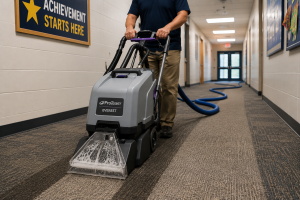
Commercial carpets take a beating. In a busy office building, school, or healthcare facility in North Dakota, foot traffic, spills, and tracked-in dirt accumulate faster than routine vacuuming can keep up with. Over time, that buildup affects how a space looks, how it smells, and how safe it is for the people who use it every day.
A walk-behind carpet extractor is one of the most effective tools available for deep-cleaning commercial carpets — pulling out embedded soils, allergens, and residue that vacuums simply cannot reach. If your facility relies on periodic cleaning from an outside contractor, or if your current equipment is not getting the results your operation needs, it may be time to take a closer look at what a dedicated walk-behind extractor can do.
What Is a Walk-Behind Carpet Extractor?
A walk-behind carpet extractor is a self-propelled or operator-guided machine that simultaneously injects a cleaning solution into carpet fibers and extracts it — along with loosened soil — back into a recovery tank. Unlike a portable extractor or a small rental unit, a commercial walk-behind extractor is designed for consistent, high-volume use across large floor areas.
The components that determine cleaning performance are the vacuum motor strength, the solution pump pressure, the water lift rating, the tank capacity, and the traction drive system. When those elements work together well, the result is cleaner carpet, faster drying times, and a more consistent outcome across every square foot of your facility.
The Betco FiberPro FP 20: Built for Productive Commercial Cleaning
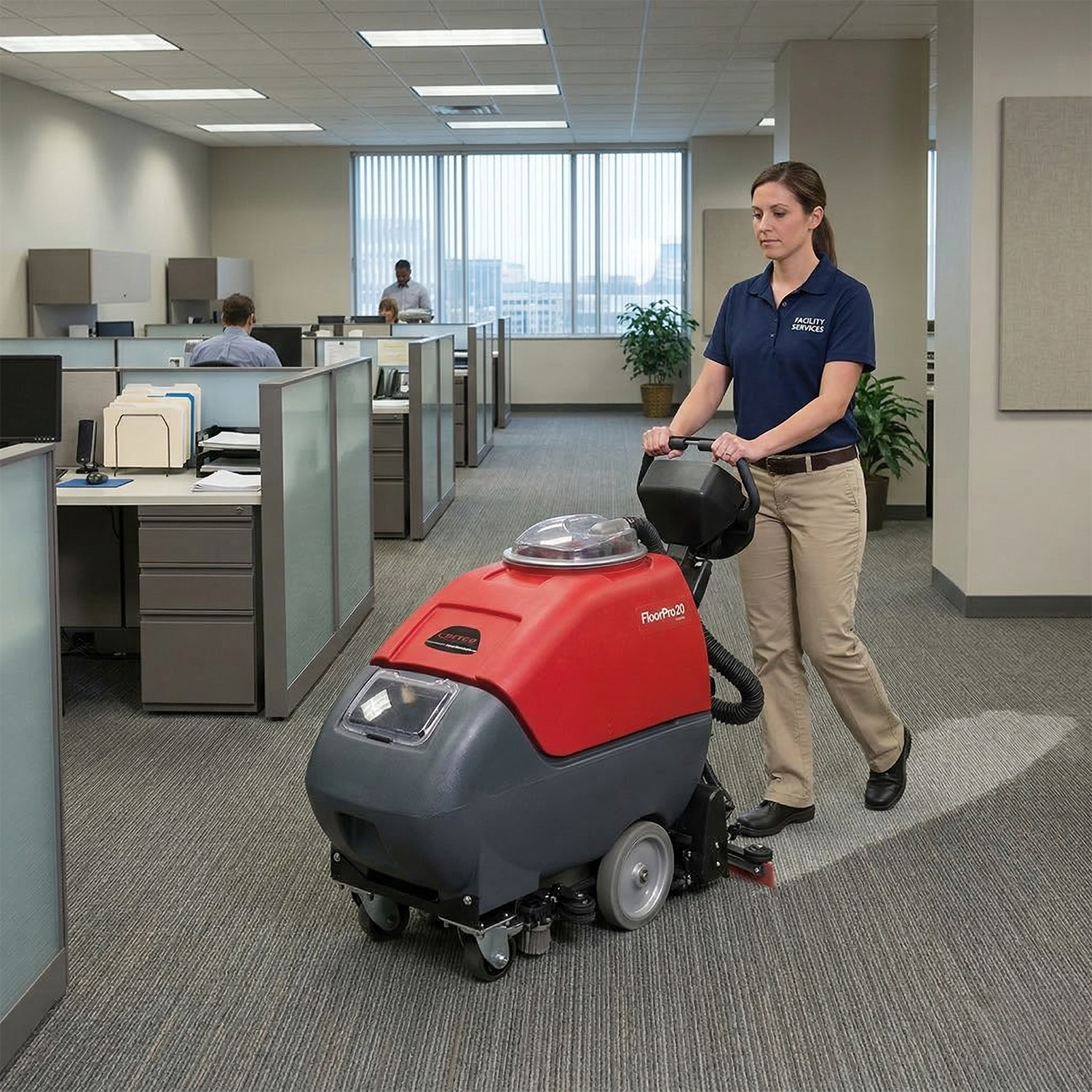
The Betco FiberPro FP 20 Walk Behind Carpet Extractor — with an 18-inch cleaning path — is engineered for facilities that need professional results without disrupting day-to-day operations. D&E Supply carries this machine for customers across North Dakota and the Midwest who need dependable carpet care equipment that performs at a commercial level every time.
Here is a breakdown of the key specifications.
Motor and Suction Power
The FP 20 is equipped with a 2.0 HP, three-stage vacuum motor — delivering strong, sustained suction across the full cleaning path. A water lift rating of 117 inches puts this machine in the high-performance category for extractors, meaning it pulls moisture and soil effectively from carpet fibers rather than just wetting the surface.
The brush motor runs at 0.33 HP, agitating carpet fibers to loosen embedded soils before extraction.
Solution Delivery
The solution pump operates at 100 PSI, driving the cleaning solution deep into the carpet pile. The 20-gallon solution tank means your operator can cover significant square footage before stopping to refill — reducing downtime and improving overall productivity per shift.
Recovery and Cleanup
The recovery tank also holds 20 gallons, matched to the solution tank for a balanced, interruption-free workflow. When the job is done, the extraction is complete: loosened soils and dirty solution are contained in the recovery tank, not redistributed across the floor.
Mobility and Power
A variable-speed traction drive gives operators precise control over cleaning speed — useful when working around furniture, in hallways, or on carpet with varying pile heights. The 75-foot power cord provides a generous working radius, reducing the need to constantly relocate the power source. The machine measures 49 inches long by 22 inches wide by 41 inches tall, and operates on a standard 115-volt AC power supply.
Who Benefits Most from a Walk-Behind Extractor?
A walk-behind carpet extractor is a strong investment for any commercial facility with significant carpeted square footage. Some of the markets where D&E Supply customers put this equipment to work include the following.
Building service contractors rely on walk-behind extractors to efficiently service multiple client accounts. Speed and reliability are non-negotiable. The FP 20’s large tank capacity and strong vacuum performance support the throughput BSCs need to stay on schedule across every account.
K-12 schools and universities face high-traffic hallways, classrooms, and common areas that accumulate soil rapidly. Regular deep extraction keeps those spaces looking clean and extends the life of the carpet — a meaningful cost-saving factor for any school maintenance budget.
Healthcare facilities require clean environments that support infection control. Carpeted waiting rooms, corridors, and administrative areas benefit from thorough extraction that removes allergens, contaminants, and odor-causing residue.
Hospitality and property management depend on carpet appearance to make a first impression. A walk-behind extractor makes it practical to deep-clean guest rooms, lobbies, and common areas on a consistent schedule rather than waiting for visible soiling.
Office buildings and general commercial spaces with carpeted open areas, conference rooms, and high-traffic entry zones benefit from regular extraction to protect both appearance and indoor air quality.
Common Mistakes in Commercial Carpet Care
Even facilities with dedicated cleaning programs make avoidable errors in carpet extraction. Here are a few worth knowing.
Relying only on vacuuming. Daily vacuuming removes surface debris but does not address the oils, allergens, and ground-in soils that accumulate in the carpet backing. Extraction is the only method that addresses what lives below the surface.
Over-wetting during extraction. Using too much solution is one of the most common extraction errors. It leads to extended drying times, potential mold growth beneath the carpet, and residue that reattracts soil faster than a properly extracted carpet does. A well-calibrated machine at the right pump pressure and pass rate prevents this.
Waiting too long between deep cleans. High-traffic areas often need extraction more frequently than facilities schedule it. In North Dakota, where tracked-in sand, salt, and moisture are seasonal realities, waiting too long between deep cleans allows soils to bond to carpet fibers, making them much harder to remove.
Skipping pre-treatment on high-traffic areas. Spot treating heavy-traffic lanes or stained areas before extraction significantly improves results. A targeted pre-spray step before the extractor passes through loosens soils and maximizes what the machine can remove.
Using the wrong machine for the square footage. A portable extractor suited for a small office is not the right tool for a 30,000-square-foot facility. Matching machine capacity to the cleaning task protects equipment, improves results, and reduces the total labor time per clean.
Frequently Asked Questions
What is the difference between a carpet extractor and a steam cleaner? A carpet extractor uses a cleaning solution injected under pressure, followed by high-suction vacuuming to pull the solution and loosened soils out of the carpet. A steam cleaner uses hot vapor to loosen soils. Commercial carpet extractors are generally preferred in facility maintenance for their ability to remove soils and moisture more thoroughly and efficiently across large floor areas.
How long does it take carpet to dry after extraction? Dry time depends on the machine’s water lift, the carpet pile depth, ambient temperature, and airflow in the space. A high-performance extractor like the Betco FiberPro FP 20 — with a 117-inch water lift and a 2.0 HP vacuum motor — removes significantly more moisture than lower-rated machines, which shortens dry time. Good airflow and moderate room temperature speed the process further.
How often should commercial carpet be extracted? Frequency depends on foot traffic, facility type, and soil load. High-traffic commercial environments often benefit from extraction every one to three months, with more frequent attention to heavily used zones. Facilities in regions with seasonal mud, snow, and salt — like North Dakota — may benefit from increased frequency during winter months and spring transition.
Can one person operate a walk-behind extractor? Yes. Walk-behind extractors are designed for single-operator use. Variable-speed traction drive, like the system on the Betco FiberPro FP 20, makes it straightforward for one operator to manage the machine across a range of environments and carpet types.
Is the Betco FiberPro FP 20 available through D&E Supply? Yes. D&E Supply carries the Betco FiberPro FP 20 Walk Behind Carpet Extractor (Item BC-E87303) and can help you determine whether it is the right fit for your facility’s cleaning program. Contact our team or browse the catalog at catalog.desupply.com to get started.
The Right Equipment Makes the Difference
Carpet maintenance is one of those facility tasks that is easy to underestimate — until the results start showing up in how a building looks, smells, and feels. Investing in the right walk-behind carpet extractor gives your team the capability to stay ahead of soil buildup, extend the life of your carpet investment, and maintain a space that reflects well on your organization.
D&E Supply has been helping North Dakota businesses find the right facility maintenance equipment since 1966. Our knowledgeable team can help you evaluate your options, match the right machine to your cleaning program, and make sure you have the supplies to run it effectively.
Visit desupply.com, browse our catalog at catalog.desupply.com, or call us at 701-255-4755. We are here to help.