Commercial Warewashing Chemicals: Getting Your Dishroom Ready for the Holiday Rush
From mid-October through New Year’s, kitchens across North Dakota run at full speed. Restaurants book holiday parties, school cafeterias serve special meals, churches host community dinners, and hotels handle banquets every weekend.
Every one of those events ends in the dishroom. If dishes come out spotted, glasses come out cloudy, or pots need a second wash, your line slows down, and your labor costs climb. The right commercial warewashing chemicals, used the right way, keep dishes clean the first time and keep your kitchen inspection-ready.
Here’s how to set up your dishroom before the busiest season of the year.
How Commercial Warewashing Works
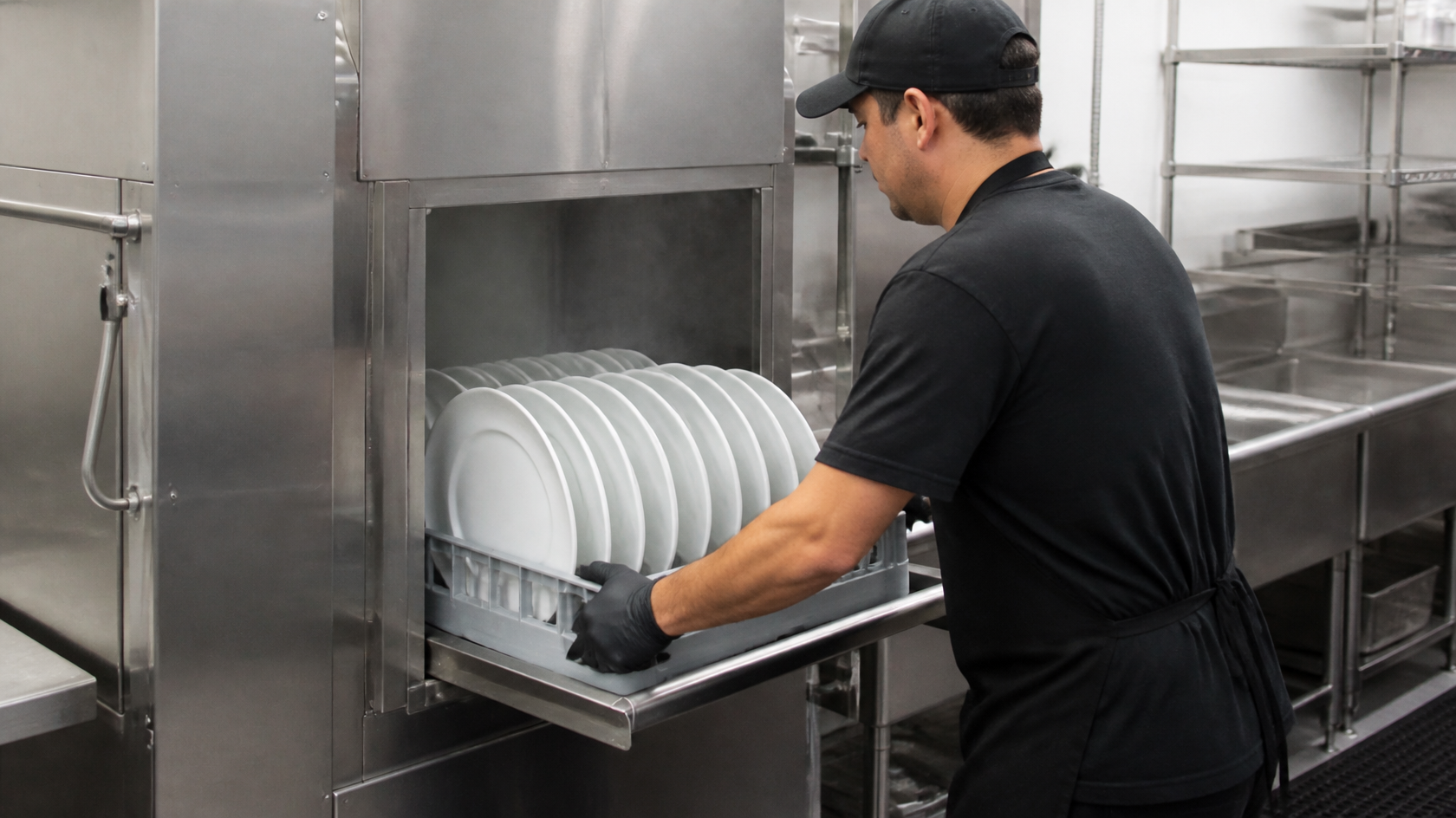
A commercial dish machine relies on four things working together: water temperature, wash time, mechanical action, and chemistry. When one of those is off, the others can’t make up for it.
Most dishrooms use three core products:
- Detergent to break down and remove food soil
- Rinse aid to help water sheet off so dishes dry without spots
- Sanitizer for low-temperature machines that use chemicals instead of heat to sanitize
Add a presoak for heavy soils and a delimer for scale, and you have a complete warewashing program.
Choosing the Right Machine Detergent
Liquid detergent for all temperature machines
Betco Symplicity All Temp Machine Detergent is a concentrated, heavy-duty, non-chlorinated detergent that works in both high- and low-temperature machines. It’s free-rinsing, NSF-certified, and effective in hard water. Its SureConnect closed system means no contact and no spills during changeouts, which improves safety for your staff. Larger kitchens can order it in a 5-gallon pail.
Solid detergent for less waste
Betco Symplicity Blaze Machine Detergent is a highly concentrated, 100% active solid detergent for high- and low-temperature dish machines. It runs only through a chemical management system, so it can’t be misused, and the capsule fully empties, so nothing goes to waste.
Rinse Aid: The Difference Between Clean and Spotless
Dishes can come out clean and still look bad. Water spots and streaks on glasses are often a rinse problem, not a wash problem, especially in areas with hard water.
Betco Symplicity All Temp Rinse Aid delivers rapid sheeting for spot-free drying in both low- and high-temperature machines. Faster drying also means dishes get back on the line sooner during a rush. It’s also available in a 5-gallon pail.
Sanitizing in Low Temperature Machines
High temperature machines sanitize with hot water. Low temperature machines use a chemical sanitizer instead, so that product has to be in the system and working every cycle.
Betco Symplicity Low Temp Machine Sanitizer 215 is an EPA-registered, sodium hypochlorite-based sanitizer for low-temperature and low-energy dish machines. It’s safe for stainless steel, glass, china, porcelain, and plastic. It isn’t recommended for sterling silver, silver plate, or other soft metals, so keep those items out of the low-temp machine.
Check sanitizer levels with test strips at the start of every shift. It takes seconds and is one of the first things a health inspector will look at.
Tackle Heavy Soils Before They Reach the Machine
Holiday menus mean baked-on casseroles, roasting pans, and sticky desserts. Sending those straight into the dish machine often means a second run.
Presoak
Betco Symplicity Pinnacle Pre-Soak with Enzymes is a solid, dual enzyme presoak that quickly breaks down and suspends food soils for a cleaner first pass. It’s NSF certified and 100% active, so a little goes a long way.
Pots, pans, and hand washing
For items washed by hand, Betco Symplicity In-Sync Hand Dishwashing Detergent cuts through tough grease on heavily encrusted pots and pans. It rinses freely, holds stable suds, and is mild on hands at dilution.
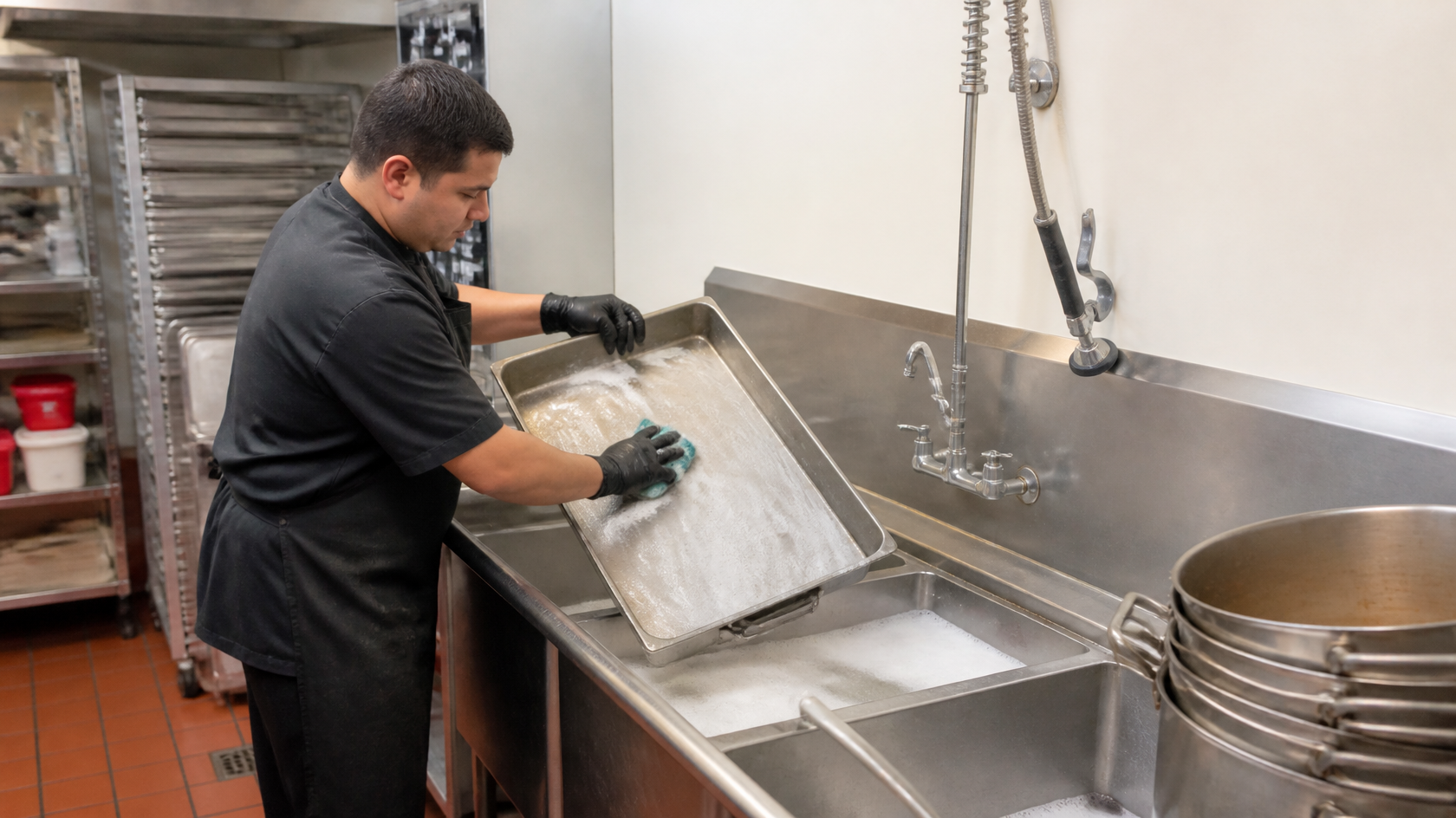
Sanitizing at the three-compartment sink
Wash, rinse, and sanitize, in that order, every time. For bars and kitchens that sanitize glassware by hand, B-T-F Chlor-Tab Sanitizer is a portion-controlled tablet made for public eating and drinking establishments. It’s especially formulated for beer and beverage glasses, and sanitized items don’t need a potable water rinse afterward.
Keep Scale From Slowing You Down
Hard water is common in many parts of North Dakota, and the minerals it carries leave lime scale behind on dishroom surfaces and equipment. Scale makes surfaces harder to clean and can affect how well your machine performs.
Betco MAD Mild Acid Detergent is a concentrated blend of acids and detergents that removes rust, lime, and scale from non-porous surfaces. Because it doesn’t contain harsh sulfuric acids, it won’t harm floors or drains. Always follow your dishwasher manufacturer’s instructions for deliming the machine itself.
Holiday Dishroom Checklist
Before the season
- Have your dish machine and chemical dispensers inspected and calibrated
- Delime the machine and clean the wash arms, rinse arms, and curtains
- Stock extra detergent, rinse aid, sanitizer, and test strips
Every shift
- Check wash and rinse temperatures against the machine’s data plate
- Test sanitizer concentration with test strips
- Scrape and presoak heavily soiled items before racking
End of day
- Drain, clean, and refill the machine
- Clean strainers and scrap trays
- Let the machine air dry with the door open
Common Warewashing Mistakes
- Overloading racks. Water and chemicals can’t reach every surface, so dishes come out dirty.
- Skipping the scrape. Food debris clogs wash arms and dirties the wash water faster.
- Ignoring empty containers. A dishwasher running without detergent or sanitizer is just rinsing dishes.
- Guessing at dilution in the sink. Use measured portions or a dispenser so the concentration is right every time.
- Letting scale build up. Scale hurts cleaning results and makes the machine work harder.
Frequently Asked Questions
What chemicals does a commercial dish machine need?
Most machines need a detergent and a rinse aid. Low-temperature machines also need a chemical sanitizer. Many kitchens add a presoak for heavy soils and a delimer for scale.
Why are my glasses coming out spotty or cloudy?
Spots are often caused by hard water, low rinse aid, or incorrect rinse temperature. Check your rinse aid supply and dispenser setting, then confirm the machine is reaching the right temperatures.
What’s the difference between high-temp and low-temp dishwashers?
High temperature machines sanitize with very hot final rinse water. Low temperature machines sanitize with a chemical sanitizer, which uses less energy but requires the sanitizer to be in the system on every cycle.
How often should a dish machine be delinked?
It depends on water hardness and use. Kitchens with hard water often need to delime more frequently. Follow your machine manufacturer’s guidance and watch for visible scale.
Can D&E Supply help set up our dish chemical program?
Yes. Our team can help you choose the right products for your machine and water conditions and support your dishroom through the busy season.
Keep Your Kitchen Moving This Holiday Season
Busy weeks are not the time to find out your dishroom can’t keep up. The right commercial warewashing chemicals, a dialed-in machine, and a simple daily routine keep dishes spotless and your line on pace from the first holiday party to the last New Year’s brunch.
D&E Supply has supported restaurants, schools, churches, and hospitality kitchens across North Dakota since 1966. Our knowledgeable staff can help you choose the right detergent, rinse aid, and sanitizer for your machine and water conditions.
Browse our warewashing machine chemicals, visit desupply.com, or call us at 701-255-4755.