Commercial laundry chemicals decide whether your towels, sheets and mop heads come out clean, soft and odor free, or gray, stiff and smelly. If you run an on-premise laundry in a hotel, care home, gym, school or restaurant, you already know the frustration of rewashing loads and replacing linens too early.
The fix is rarely a stronger detergent. It is the right mix of products, used in the right order, at the right dose. This guide explains what each laundry chemical does, how to match them to your soil types, and how to build a simple program your staff can run every day without guessing.
Quick answer: Most commercial laundries need four core chemicals: a detergent to lift soil, an emulsifier or prewash to break down grease and oils, a bleach or bleach alternative to brighten and sanitize, and a sour and softener in the final rinse to neutralize alkalinity and leave fabrics soft. Automatic dispensing keeps dosing consistent.
How Commercial Laundry Chemicals Work Together
A home washer runs one soap for everything. A commercial machine runs a short series of baths, and each bath does a different job. Think of it like a recipe. Skip a step or use the wrong amount and the whole load suffers.
Four things drive every wash: chemistry, water temperature, time and mechanical action. If you lower one, you need more of another. That is why laundry programs built for low-temperature water lean harder on chemistry, and why a busy laundry that shortens cycles needs products that work fast.
The Typical Wash Cycle
- Flush: plain water rinses away loose soil.
- Break or prewash: detergent plus an emulsifier or prewash attacks heavy soil, grease and body oils.
- Suds: more detergent finishes the cleaning.
- Bleach: chlorine or oxygen bleach brightens whites and removes stains.
- Rinses: clear water carries away chemistry and soil.
- Final rinse (sour and softener): neutralizes leftover alkalinity and softens the fabric.

The Core Commercial Laundry Chemicals
Laundry Detergent
Detergent is the workhorse. It contains surfactants that loosen soil and keep it suspended in the water so it rinses away instead of settling back on the fabric. Liquid detergents dispense easily through automatic pumps. Powder detergents, like Performance Plus Low Suds Powder Laundry Detergent, work well for smaller laundries that measure by hand.
For a dispensed system, Betco Symplicity Detergent is designed to pair with the rest of the Symplicity line so each product does its own job without fighting the others.
Emulsifier and Prewash
Grease, cooking oil, body oils, lotions and makeup are tough on detergent alone. An emulsifier breaks those oils into tiny droplets that rinse away. Kitchens, spas and fitness centers usually need one. Look at Betco Symplicity Emulsifier for heavy oil loads.
Specialty prewashes target specific problems. The Symplicity Pro-G Healthcare Prewash is aimed at healthcare linens, and other prewashes in the line address solvent-based soils and rust or iron stains.
Bleach and Bleach Alternatives
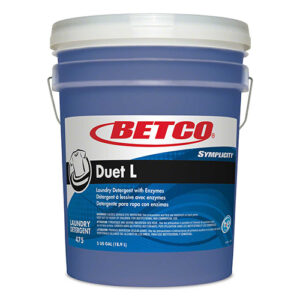
Chlorine bleach brightens white cotton and helps sanitize, but it can fade colors and weaken fibers over time. Oxygen-based or “bleach alternative” products are gentler on colored linens and blends. A combined product such as Betco Symplicity Duet-L Laundry Detergent with Bleach Alternative cuts the number of pumps you need.
Sour and Softener
Detergents are alkaline. If that alkalinity stays in the fabric, towels feel scratchy, whites yellow and guests can get skin irritation. A sour lowers the pH in the final rinse. A softener adds a soft hand and cuts static. Betco Symplicity Sour and Softener does both in one step.

Comparing Laundry Chemicals at a Glance
| Chemical | What It Does | When You Need It | Watch Out For |
|---|---|---|---|
| Detergent | Lifts and suspends general soil | Every load | Overdosing leaves residue and suds |
| Emulsifier | Breaks down grease and oils | Kitchen towels, spa and gym linens | Skipping it on oily loads causes odor |
| Specialty prewash | Targets blood, solvents, rust | Healthcare, shop rags, iron-rich water | Use only on matching soil |
| Chlorine bleach | Brightens and sanitizes whites | White cotton sheets and towels | Fades colors, weakens fibers |
| Bleach alternative | Brightens with less fabric wear | Colored linens and blends | Often needs warmer water |
| Sour and softener | Neutralizes pH, softens fabric | Final rinse of every load | Too much softener cuts absorbency |
Match Your Program to Your Facility
Hotels and Hospitality
Guests judge a hotel by its towels. Hotels need bright whites, soft hand and no odor. A detergent, bleach, and sour and softener program covers most loads, with an emulsifier added for restaurant linens. If you also run a kitchen, our guide to commercial warewashing for the holiday rush covers the dishroom side.
Healthcare and Long-Term Care
Care homes and clinics deal with heavy protein soils and infection control concerns. A healthcare prewash, a strong detergent and proper bleach use are the basics. The CDC’s laundry and bedding guidelines explain handling and processing practices for healthcare linens.
Gyms, Spas and Salons
Body oils and lotions build up fast in towels and cause sour smells. An emulsifier is the key product here, followed by a thorough rinse and a light softener dose so towels stay absorbent.
Restaurants and Kitchens
Bar mops and kitchen towels carry grease and food soil. A strong emulsifier plus detergent, followed by bleach on whites, keeps them usable longer.
Schools, Shops and Oil Field Crews
Mop heads, microfiber, shop rags and uniforms each need their own approach. Microfiber should skip fabric softener because it clogs the fibers. Shop rags may need a solvent prewash.

Common Commercial Laundry Problems and Fixes
| Problem | Likely Cause | Fix |
|---|---|---|
| Gray or dingy whites | Too little detergent or low water temperature | Check dosing and water heater settings |
| Sour or musty odor | Oils left in fabric, wet linens sitting too long | Add emulsifier, move loads to dryer promptly |
| Stiff, scratchy towels | Alkaline residue, no sour | Add or increase sour in final rinse |
| Towels not absorbing | Too much softener | Cut softener dose |
| Yellow or orange stains | Iron in water | Use a rust or iron prewash |
| Faded colors | Chlorine on colored linens | Switch colored loads to bleach alternative |
Why Automatic Dispensing Pays Off
Hand measuring is the biggest source of waste in small laundries. Staff “add a little extra” to be safe, which costs money and leaves residue. Automatic dispensers pump the right amount of each chemical at the right point in the cycle. That means consistent results, less product used and fewer rewashes.
Closed systems also keep staff from handling concentrated chemicals. Ask our team about dispenser options when you set up a new program.
How to Choose Your Commercial Laundry Chemicals
- If you wash mostly white cotton sheets and towels, choose detergent, chlorine bleach and a sour and softener.
- If you wash colored linens or blends, choose a detergent with bleach alternative, such as Duet-L.
- If loads carry grease, lotion or body oil, add an emulsifier.
- If you run healthcare linens, add a healthcare prewash and follow CDC handling guidance.
- If you hand measure in a small laundry, a low-suds powder detergent is easy to portion.
- If your laundry is busy and staff turnover is high, choose a dispensed program for consistency.
- If you wash microfiber, skip the softener and use a dedicated wash.
Frequently Asked Questions
What chemicals are used in commercial laundry?
Commercial laundries typically use a detergent, an emulsifier or prewash for oils, a chlorine bleach or bleach alternative, and a sour and softener in the final rinse. Each product works at a different stage of the wash cycle. Together they clean, brighten, neutralize pH and soften fabrics more effectively than a single all-in-one soap.
What does laundry sour do?
Laundry sour lowers the pH of the final rinse. Detergents leave alkaline residue behind, which makes towels feel harsh, causes yellowing and can irritate skin. A sour neutralizes that residue so fabrics feel better, look brighter and last longer. Many programs combine the sour and softener into one product for simpler dispensing.
Can I use household detergent in a commercial washer?
You can, but it usually costs more per load and cleans less effectively. Household detergents are not designed for the short, high-volume cycles of commercial machines, and they often create too many suds. Commercial laundry chemicals are concentrated, built for automatic dispensing and formulated to handle heavy soils at scale.
Why do my commercial towels smell sour after washing?
Sour smells usually come from body oils, lotions or grease left in the fabric, or from wet towels sitting too long before drying. Add an emulsifier to break down oils, confirm your detergent dose and water temperature, and move loads to the dryer quickly. Overloading the washer can also trap soil.
Should I use fabric softener on microfiber?
No. Fabric softener coats microfiber strands and fills the tiny gaps that trap dirt and moisture, so the cloths stop working. Wash microfiber separately with a mild detergent, skip softener and bleach, and air dry or tumble dry on low heat to protect the fibers.
The Bottom Line
Clean, soft linens come from a balanced program, not a single strong soap. Use detergent for general soil, an emulsifier for oils, the right bleach for your fabrics, and a sour and softener in the final rinse. Dispense automatically when you can, and match the program to the soils your facility actually sees. You will rewash less, replace linens less often and spend less on chemicals.
Why Order Your Commercial Laundry Chemicals From D&E Supply
Locally owned since 1966, D&E Supply Company is a full-line distributor of janitorial supplies, cleaning chemicals, equipment and paper products based in Bismarck, ND. We help hotels, care facilities, schools, restaurants and fitness centers across North Dakota and the Midwest build laundry programs that clean right the first time, with Betco and other trusted brands in stock and a team that knows the products.
Browse our full line of commercial laundry chemicals in the online catalog, call us at 701-255-4755, or contact our team to set up a laundry program for your facility.